Choosing the best AI training server manufacturer in China is not a logo contest. It is a test of engineering, integration, and support. NVIDIA CEO Jensen Huang has summarized the wider shift: “The future of computing is accelerated computing.” For buyers, that shift makes server design especially important.
A serious comparison should examine more than GPU count. Check whether the manufacturer can configure accelerators, high-speed networking, storage, and power delivery as one working system. Ask for workload-specific benchmark results, thermal test conditions, and clear details about warranty and service response. A row of GPU specifications looks impressive. Real training runs are less forgiving.
Cooling deserves close attention. Dense systems can produce substantial heat, and airflow or liquid-cooling choices affect reliability, noise, and operating costs. So does integration: a mismatch between GPUs, network adapters, or software can slow a cluster even when each component is capable. Ask how the vendor validates configurations and handles firmware updates.
There is no universal winner. A research lab building a small cluster may value flexible configurations, while an enterprise may prioritize predictable delivery and support across many racks. Those priorities can conflict. I would treat unverified performance claims cautiously; published results need enough detail to reproduce them. This guide compares Chinese manufacturers through practical criteria, helping readers identify an ai training server manufacturer that fits their workload, budget, and deployment plan—not simply the boldest brochure.
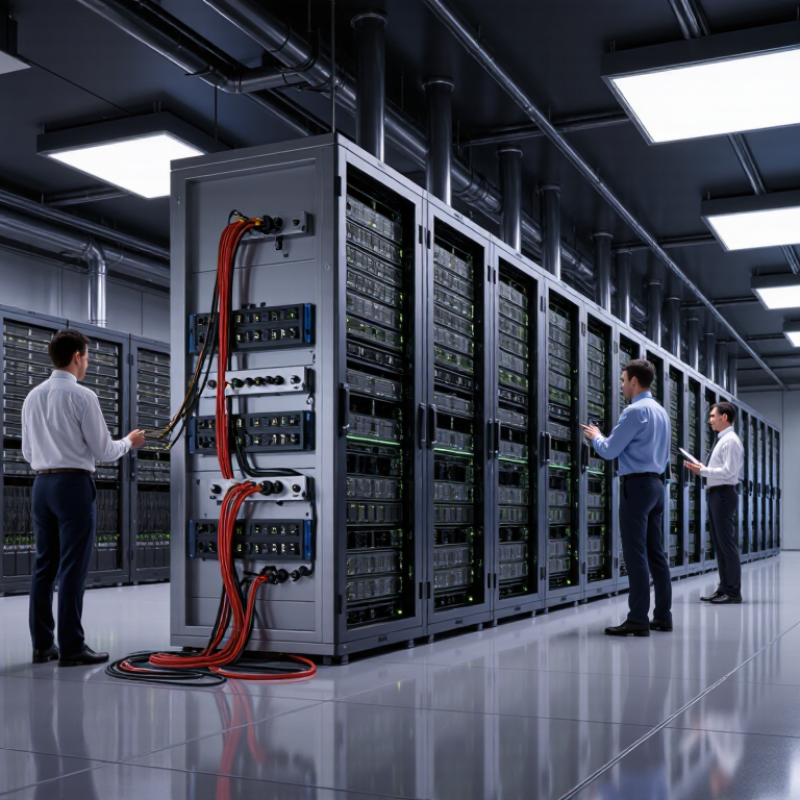
An AI training server manufacturer designs and builds systems for workloads that process large datasets and train machine-learning models. Its work goes beyond assembling components. Engineers select accelerators, processors, memory, storage, and high-speed network interfaces so they can operate together under sustained load. The right configuration depends on model size, data volume, and the number of users sharing the system.
Cooling is critical. High-power accelerators can produce substantial heat, so manufacturers must plan airflow, fan placement, and power delivery around the finished chassis. They also test system stability, thermal behavior, and component compatibility before shipment. A useful supplier can explain those test conditions and provide clear configuration details, rather than relying only on peak performance figures.
After installation, firmware updates, troubleshooting, and replacement parts affect how reliably a server performs over time. Buyers should ask how support is delivered and whether the system has been tested with their intended software and workload. A high accelerator count may look impressive, but it does not guarantee better training speed. Real workloads vary, and benchmark results may not match a buyer’s data pipeline. I would want to verify performance with representative jobs before committing; that step is easy to underestimate.
It designs and builds systems for training machine-learning models. Engineers select accelerators, processors, memory, storage, and network components. They also test cooling, stability, and compatibility. Assembly alone is not enough.
Large server producers, specialist hardware makers, and contract manufacturers may offer these systems. Some design the chassis and motherboard. Others assemble servers around customer-selected components or provide rack integration and deployment support.
Compare systems against your model size, data format, and training schedule. Request sustained-throughput results, thermal test reports, configuration sheets, and written support terms. A high accelerator count can look impressive, but it proves little by itself.
Confirm rack depth, power needs, cooling capacity, and network bandwidth. Ask whether the server passed sustained workload testing. A dense rack needs enough airflow during long training runs. Small details matter.
Peak figures may not match your data pipeline or software setup. Poorly balanced memory, storage, and network links can reduce efficiency. Test a representative workload when possible. Not always simple.
It should explain the configuration, workload, test duration, and thermal behavior. Ask how the test setup compares with your planned deployment. I might still miss a detail, so checking the conditions yourself is worthwhile.
Ask about firmware updates, troubleshooting, replacement parts, and service response times. Check spare-part availability and support coverage in writing. A low price can feel less appealing if repairs take weeks.
Yes. Run a representative job and compare its results with your needs. Speak with a recent customer if possible. Even a careful pilot leaves some uncertainty.
Choosing the best AI training server manufacturer in China starts with understanding what the role involves. A manufacturer designs and builds systems for demanding machine-learning workloads, combining processors, accelerators, memory, storage, networking, and power and cooling solutions. High-performance servers should support efficient parallel computing, fast data movement, reliable operation, and configurations that can scale with changing training needs.
Chinese manufacturers can differ in system design, customization, production capacity, technical support, and delivery arrangements. Rather than relying on a single specification or headline performance figure, buyers should compare how well each option fits their workloads, infrastructure, budget, and deployment plans. They should also evaluate compatibility, service and maintenance support, product documentation, and the manufacturer’s ability to provide consistent quality. The best AI training server manufacturer is ultimately the one that offers a dependable, well-matched solution and can support it throughout its operational lifecycle.

 Aiserver Manufacturer