Explore our state-of-the-art server components, scalable architecture models, and next-generation GPU platforms engineered for heavy workload processing.

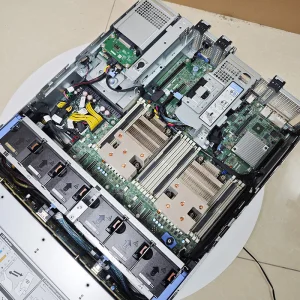
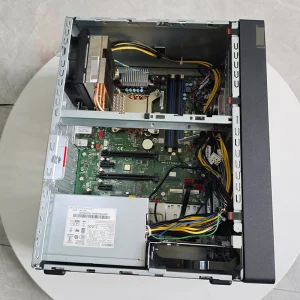
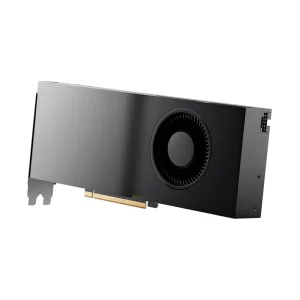
The global datacentre footprint is undergoing an unprecedented architectural pivot. Driven by the exponential scale-up of Large Language Models (LLMs), semantic search indexing, and real-time GPU-accelerated inference pipelines, the demands placed upon hardware infrastructure have outpaced traditional CPU-centric systems. As a leading manufacturer and factory hub for AI Server structures and Fusion~server architectures, we recognize that raw computing power must be paired with low latency, efficient cooling, and system-level density Optimization.
Modern AI Server Fusion~servers represent the convergence of high-capacity multi-core central processing with highly parallel graphics processing units (GPUs) and application-specific integrated circuits (ASICs). The ultimate goal is to process massive vector embeddings—the backbones of Google's semantic search technology—within fractions of a millisecond. To do this, server system configurations must address strict hardware considerations including NVLink/PCIe bus topology, memory bandwidth, thermal thresholds, and custom power distribution models.
Expert Industry Insight: High-performance servers are no longer just clusters of compute; they are highly integrated thermodynamic systems where the design of the power delivery system and structural cooling layout dictates the performance limit of deep learning software stack implementations.
Our global factory specializes in engineering these rack-level integrations. By designing custom motherboard layouts, chassis ventilation pathways, and redundant power configurations, we ensure that enterprise systems operate seamlessly under 100% computational load. These designs are tested in real-world scenarios, ensuring durability for applications ranging from enterprise database virtualization to localized AI model inference.
Engineered to support massive semantic vector indexing, AI dataset training, and low-latency response systems.
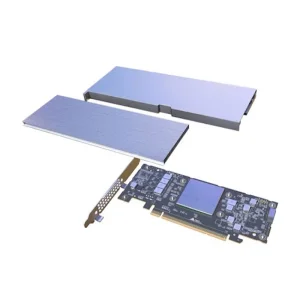
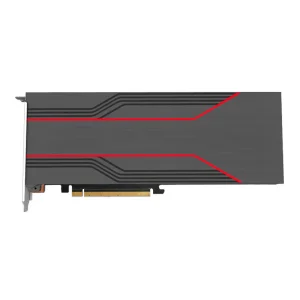
Designed to house enterprise-grade accelerators including the NVIDIA RTX Ada Lovelace series and Ascend AI processor platforms. Dynamic PCIe slot allocations ensure maximum bandwidth density for real-time model inference and computer vision analytics.
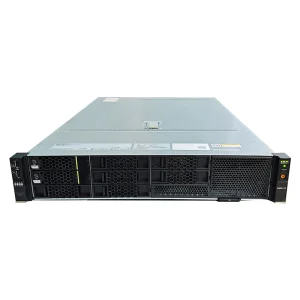
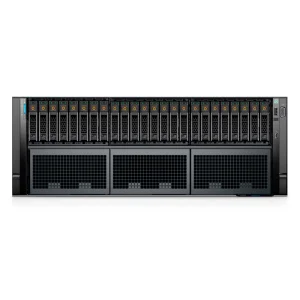
Features hot-swappable SAS/SATA/NVMe SSD arrays. Perfect for high-frequency database hosting and virtualization setups, delivering millions of input/output operations per second with minimal drive wear.
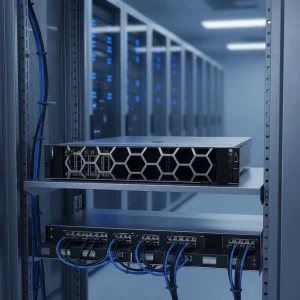
Optimized chassis airflows, dual-rotor redundancy fan systems, and liquid-to-air cooling readiness enable high-heat dissipation. This preserves processor longevity and prevents thermal throttling under intense continuous loads.
Procurement teams at hyper-scalers, regional datacentres, and research institutes evaluate AI server acquisitions through the lens of Total Cost of Ownership (TCO) combined with performance predictability. Crucial criteria involve power conversion efficiency, rack compatibility, physical space optimization, and supply-chain stability. Our factory operations are aligned with these dynamics, providing custom metal stamping, specialized PCB routing, and modular component configuration to accommodate specific local datacentre requirements.
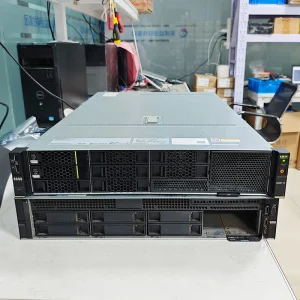
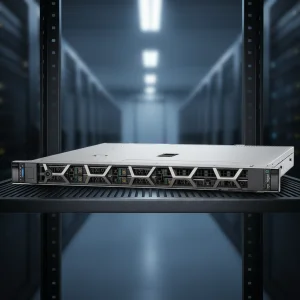
Enterprises are steering away from rigid, single-purpose server architectures. Instead, there is a distinct preference for modular rack servers, such as the 2U dual-socket setups. These platforms allow the swap-out of standard CPU nodes for high-density GPU accelerators or specialized network cards as company needs scale. This adaptability protects upfront capital investments, enabling businesses to upgrade processing speeds without discarding entire chassis platforms.
With GPUs and high-core-count CPUs requiring hundreds of watts per socket, power density per rack is climbing from 10kW to upwards of 40kW or even 100kW. System design must utilize Titanium-grade Common Redundant Power Supplies (CRPS) to minimize energy loss. By maintaining efficiency metrics above 96%, our Fusion~server chassis minimize operational costs, direct thermal emission, and facility-level power grid strains.
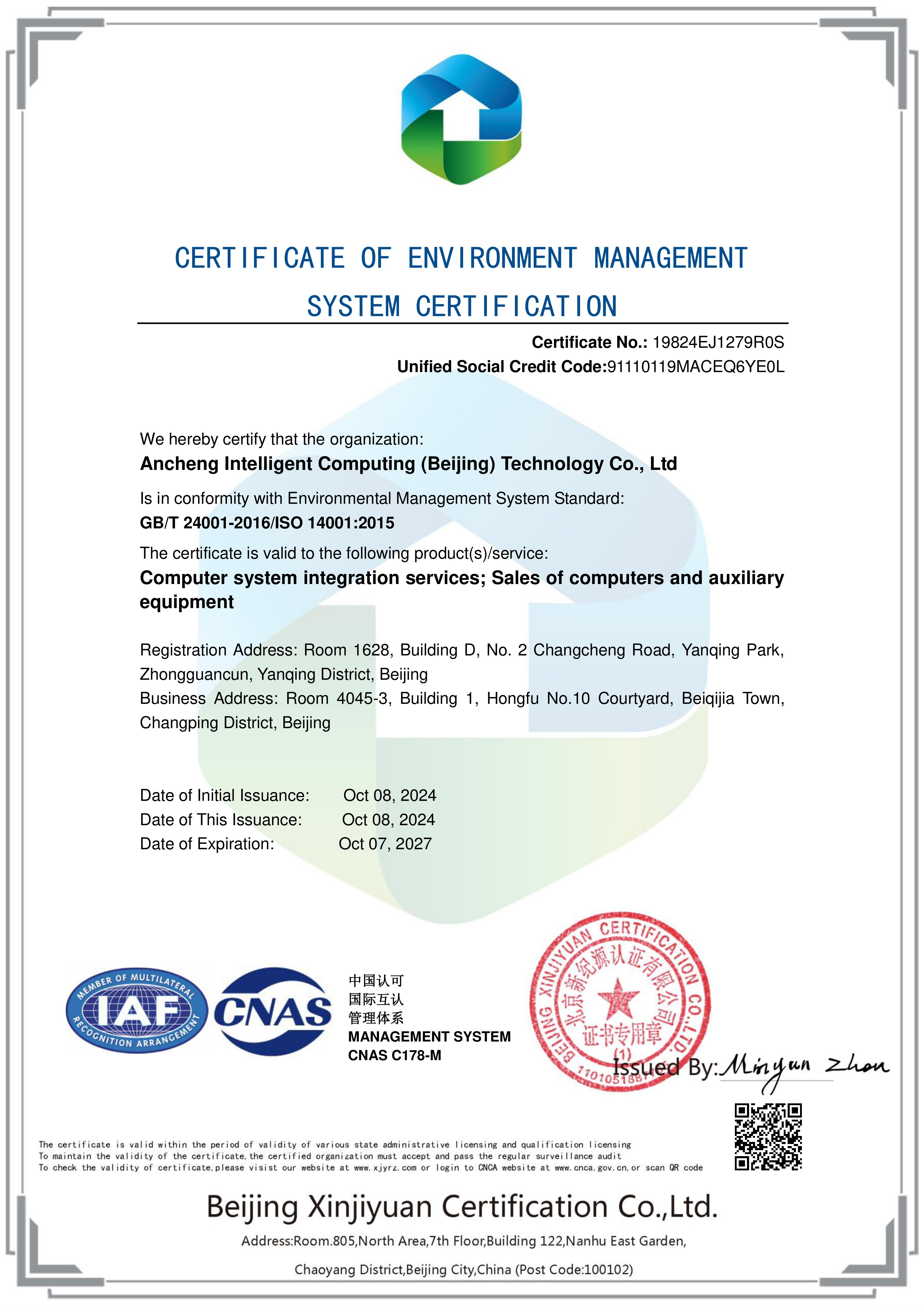
Import and export compliance rules dictate where hardware can be deployed. Datacentres across Europe, the Middle East, and Africa are bound by strict certifications regarding product origin, electromagnetic interference, and environmental footprint. Consequently, sourcing from factories that align production processes with ISO 9001 quality management and ISO 14001 environmental safety regulations is paramount for seamless project deployment.
Transparent production data, supply chain networks, and international quality management standards.


Our AI server platforms are designed to address the dynamic computational demands of modern commerce. Whether hosting sensitive banking records or handling live streaming video processing pipelines, these systems offer target performance optimizations suited to each distinct workload class.
Enterprise Resource Planning (ERP) systems demand deep database memory mapping alongside high transaction throughput. Traditional setups frequently suffer from bottlenecks due to processor-to-memory communication gaps. Our server architectures support multi-channel DDR4/DDR5 systems paired with PCIe hardware-level RAID arrays. This provides the low read-latency and high security required by industries handling finance, client profiles, and supply inventory tracking.
Machine learning workflows are split into two major phases: training and inference. Inference involves applying pre-trained models to real-time inputs, such as translating natural language search queries into semantic vectors. Workstations optimized for this process require GPU accelerators capable of maintaining constant floating-point operation levels. Systems utilizing GPU acceleration components can run neural networks locally, decreasing the reliance on external cloud APIs and keeping critical enterprise IP secure.
Maximizing physical hardware usage is critical for modern IT cost reduction. Hypervisors virtualize a single physical machine into dozens of virtual private servers (VPS). By combining high core counts with robust network adapters, these rack servers ensure that cloud environments run isolated processes without crossing data lanes. This reliability prevents noisy-neighbor phenomena in multi-tenant environments.
An overview of how we plan to integrate new CPU architectures and high-density system designs to keep pace with semantic search expansion.
Understanding E-E-A-T in server manufacturing means focusing on structural detail. A rack server chassis is not merely a metal shell holding components; it is an optimized environment designed to fight the physics of signal degradation and heat buildup. When operating at high bus frequencies (such as PCIe Gen 5 speeds of 32 GT/s), even a minute trace deviation on the PCB substrate can result in system instability. Our R&D engineering relies on advanced simulation tools to design motherboard trace paths, minimizing electromagnetic interference and ensuring system reliability under load.
Another major engineering factor is the implementation of Redundant Power Supplies. The power distribution board inside a Fusion~server is designed to handle active load balancing. If one power supply unit fails, the secondary unit instantly takes over the full load. This changeover occurs within milliseconds, preventing voltage drops that could trigger system restarts or data corruption in active database caches.
From a storage perspective, the transition to high-speed NVMe flash memory has redefined the layout of front-panel drive cages. Our factories design specialized backplanes with integrated PCIe switches to connect multiple NVMe drives directly to the CPU's PCIe lanes. This eliminates traditional storage controller bottlenecks, allowing database engines to scale processing rates dynamically during high-traffic intervals.
Detailed answers to technical, operational, and supply questions regarding our AI Server line.
Discover enterprise-grade rack servers, compact workstations, and hardware-accelerated processing units designed for reliable operations.
 Aiserver Manufacturer