Choosing a deep learning server manufacturer is a practical infrastructure decision, not merely a purchasing exercise. The wrong choice can leave expensive GPUs underused, cooling systems strained, and engineers waiting during routine experiments. A reliable manufacturer should understand complete workloads, from model training and fine-tuning to inference, storage, networking, and maintenance.
Jensen Huang, NVIDIA’s founder and CEO, has said, “The future of computing is accelerated computing.” His statement highlights an important selection principle: performance depends on the entire platform, not only the GPU model. Buyers should examine GPU compatibility, PCIe or NVLink connectivity, CPU balance, memory capacity, power delivery, thermal design, and rack density. A server with eight powerful GPUs may still disappoint if airflow is weak or data cannot reach them quickly enough.
Look beyond attractive benchmark numbers. Ask the deep learning server manufacturer for workload-specific results, noise and power measurements, firmware support, warranty terms, and replacement timelines. A serious supplier should explain how its systems perform with real datasets, not only laboratory samples. It should also provide remote management, documented BIOS settings, and clear upgrade paths.
Small details matter. A failed fan, loose cable, or delayed spare part can interrupt a training run for hours. This is often underestimated. I have also learned that the cheapest quotation rarely represents the lowest operating cost. Still, no checklist is perfect. Workloads change, software evolves, and predicted capacity can be wrong. The best buying decision combines technical evidence, service reliability, and a willingness to review assumptions before signing a long-term contract.
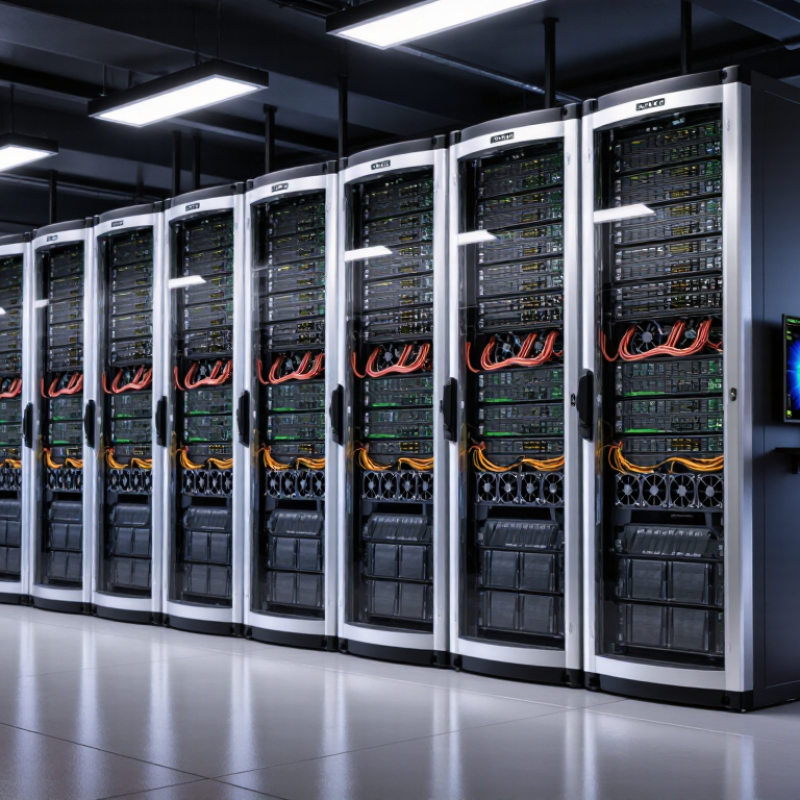
Choosing a deep learning server manufacturer starts with workload, not a glossy specification sheet. Define model size, batch size, training duration, and expected users. A vision model may need large GPU memory, while language workloads often demand fast interconnects and multiple accelerators. Measure real data movement. Small tests can mislead. A system that trains quickly on one dataset may slow sharply when storage or network traffic increases.
During deployments, I examine accelerator memory, CPU lanes, system RAM, NVMe capacity, and network bandwidth together. Balance matters. More accelerators do not guarantee faster training. Weak cooling can trigger throttling, and limited PCIe lanes can restrict communication. Ask manufacturers for verified performance data, power requirements, acoustic levels, and thermal behavior under sustained load. Request test conditions, not marketing averages. A credible supplier explains limitations and provides configuration records.
Reliability also depends on service design. Check warranty scope, replacement timelines, remote diagnostics, firmware practices, and spare-part availability. Security controls should support access logging and controlled administration. I once underestimated rack power and paid for an avoidable redesign. That mistake still influences my checklists. Leave expansion space for memory, storage, networking, and future accelerators. Yet expansion is not always economical. Compare the upgrade path with the cost of replacing the server.
| Evaluation Dimension | Deep Learning Requirement | Practical Baseline | What to Check with the Manufacturer |
|---|---|---|---|
| Workload Type | Training, fine-tuning, inference, computer vision, natural language processing, recommendation, or multimodal workloads. | Workload First Training usually needs more GPU memory, faster storage, and higher interconnect bandwidth than basic inference. |
Confirm whether the proposed configuration is optimized for the intended workload, model size, batch size, precision format, and expected user concurrency. |
| GPU Configuration | Accelerator selection should match model memory requirements, compute precision, software compatibility, and power limits. | One to eight accelerators are common server configurations. GPU memory capacity is often a key constraint for large models and high-resolution training. | Request supported accelerator counts, physical spacing, power connectors, thermal limits, direct GPU-to-GPU communication, and verified performance results for representative workloads. |
| GPU Memory | Model parameters, gradients, optimizer states, activations, and batch data must fit within available accelerator memory or be distributed efficiently. | More memory enables larger models and batches. Mixed precision can reduce memory use, but it does not eliminate the need for sufficient capacity. | Check total accelerator memory, memory error protection where available, support for memory pooling or partitioning, and upgrade options. |
| CPU and PCIe Resources | The host processor must feed the accelerators efficiently and handle data preprocessing, orchestration, and I/O tasks. | Use a modern multi-core server CPU with enough PCIe lanes for all accelerators, high-speed networking, storage adapters, and management devices. | Verify CPU socket count, core configuration, PCIe generation, lane allocation, NUMA topology, and whether any devices share bandwidth. |
| System Memory | System RAM supports data loading, preprocessing, caching, distributed training coordination, and CPU-based workloads. | At least 2–4 times the combined accelerator memory is a useful planning reference for many training systems, although the correct amount depends on the dataset and pipeline. | Confirm maximum supported RAM, memory channels, error-correcting memory support, frequency with the selected CPU, and future expansion capacity. |
| Local Storage | Training datasets, checkpoints, container images, logs, and temporary files require high throughput and adequate capacity. | Use solid-state storage for active datasets and operating-system workloads. Separate operating-system, data, cache, and checkpoint volumes where possible. | Check drive form factors, interface type, RAID or software-defined storage support, hot-swap capability, endurance ratings, and measured sequential and random I/O performance. |
| Network Fabric | Distributed training and shared datasets require low latency, high bandwidth, and stable communication between servers and storage systems. | High-speed Ethernet or another supported data-center fabric may be appropriate. The required bandwidth depends on model size, synchronization frequency, and cluster scale. | Review network adapter compatibility, port speed, topology, congestion management, cable options, remote-direct-memory support, and tested multi-node scaling. |
| Power and Cooling | Multiple accelerators can create substantial electrical and thermal loads, especially during sustained training. | Plan for redundant power supplies, adequate rack power, proper airflow, and cooling capacity based on the server's measured maximum configuration. | Ask for maximum and typical power figures, power distribution requirements, inlet temperature limits, airflow direction, acoustic characteristics, and thermal-throttling behavior. |
| Chassis and Expansion | The chassis must provide sufficient physical space, airflow, and electrical capacity for the selected accelerators and future additions. | Choose a form factor that balances density, serviceability, expansion, and data-center rack constraints. | Confirm accelerator dimensions, double-width or specialized card support, drive bays, expansion slots, cable clearance, tool-less access, and rack-rail compatibility. |
| Software Compatibility | The platform should support the required operating system, drivers, accelerator libraries, frameworks, containers, schedulers, and monitoring tools. | Use a validated software stack with documented driver and framework versions. Reproducible container environments simplify deployment. | Request a compatibility matrix, installation documentation, firmware-update process, container support, framework validation, and change-management guidance. |
| Reliability and Serviceability | Long training jobs require stable operation, fault detection, recovery procedures, and easy replacement of failed components. | Useful features include error-correcting memory, redundant power supplies, hardware monitoring, event logs, and hot-swappable components where appropriate. | Evaluate component quality, diagnostic tools, failure alerts, replacement procedures, spare-part availability, repair targets, and documented reliability data. |
| Management and Monitoring | Administrators need visibility into temperature, power, utilization, memory errors, storage health, and job-level performance. | Out-of-band management and centralized monitoring reduce downtime and simplify operation in multi-server environments. | Check remote console access, API support, role-based access control, telemetry integration, firmware inventory, automated alerts, and audit logging. |
| Security | AI servers may process confidential data, proprietary models, and regulated information. | Security should cover secure boot, firmware protection, access control, storage encryption, network isolation, and controlled administrative access. | Review hardware root-of-trust features, firmware signing, secure erase procedures, vulnerability response, supply-chain controls, and security documentation. |
| Scalability | The system should support growth in model size, dataset volume, users, and distributed training requirements. | Plan for additional memory, storage, networking, accelerators, or nodes without replacing the entire platform. | Assess upgrade paths, cluster compatibility, rack density, network expansion, configuration consistency, and the manufacturer's ability to deliver matched systems later. |
| Performance Validation | Peak theoretical compute does not guarantee useful application performance. | Benchmark with the intended model, dataset, precision, batch size, storage path, and number of nodes. | Request reproducible benchmark methodology, training throughput, inference latency, scaling efficiency, power consumption, and results under sustained workloads. |
| Total Cost of Ownership | Purchase price is only one part of the cost; electricity, cooling, support, software, storage, networking, and downtime also matter. | Compare cost per training hour, cost per inference workload, energy use, warranty coverage, and expected upgrade cycles. | Ask for power estimates, service costs, licensing requirements, warranty terms, spare-part pricing, deployment fees, and lifecycle replacement plans. |
| Technical Support | Specialized support is valuable when diagnosing accelerator, driver, firmware, networking, or distributed-training issues. | Support quality should match the operational importance of the workload and the team's in-house expertise. | Verify support hours, response targets, escalation procedures, remote troubleshooting capabilities, documentation quality, on-site service availability, and experience with AI clusters. |
Start with model size, batch size, training duration, and expected users. Vision workloads may need larger accelerator memory. Language workloads often require fast interconnects. Measure real data movement. Small tests can mislead.
More accelerators do not guarantee faster training. Limited PCIe lanes can restrict communication. Weak cooling may cause throttling during long jobs. Check sustained throughput, memory use, and thermal behavior. Balance matters.
Request verified results from workloads resembling yours. Ask for test conditions, power draw, fan noise, and temperature data. Peak specifications are not enough. Use continuous testing, not a short demonstration.
Check accelerator slots, PCIe lanes, system memory, storage bays, and network bandwidth. Leave room for future memory, storage, and networking. Multi-node systems need stable latency between machines. Expansion can become expensive. Compare upgrades with replacement costs.
Verify operating systems, container tools, drivers, frameworks, and monitoring software. Request tested configuration lists and documented firmware policies. Remote management and error logging support daily operations. Theoretical compatibility can fail in ordinary deployment.
Look for secure boot, signed updates, hardware-rooted identity, and role-based access. Detailed audit logs help track administrative activity. Test password policies and firmware recovery before deployment. Small gaps matter.
Measure power use during representative model training. Check cooling needs, fan behavior, power limits, and performance per watt. An 8-kilowatt system can create serious heat in a small room. Laboratory peaks may not reflect daily operation.
Include electricity, cooling, maintenance, software support, spare parts, and downtime. Build a five-year estimate using local energy prices. Include likely accelerator replacement cycles. My earlier rack-power estimate was wrong. Recheck assumptions quarterly.
Choosing the right deep learning server manufacturer requires more than comparing hardware specifications. Organizations should first define their workloads, including model size, training frequency, data volume, and expected performance. Key factors such as GPU and CPU capability, memory capacity, storage speed, network bandwidth, scalability, and compatibility with existing software should then be evaluated to ensure the server can support both current and future needs.
A reliable manufacturer should provide consistent product quality, clear warranties, responsive technical support, and practical maintenance services. Security features, energy efficiency, cooling design, and the total cost of ownership are also essential, as operational expenses can significantly affect long-term value. By balancing performance, expandability, reliability, service quality, security, and budget, an organization can select the deep learning server manufacturer that best fits its technical requirements and business objectives.

 Aiserver Manufacturer