Choosing the best China data center AI server manufacturer requires more than comparing product prices or GPU specifications. Buyers must examine real deployment evidence, thermal design, supply stability, and technical support. A server may look powerful on paper, yet struggle under sustained workloads. That matters.
Jensen Huang, NVIDIA’s founder and CEO, has repeatedly emphasized, “The future of computing is accelerated computing.” His statement reflects a major shift in data center planning. Modern AI servers depend on GPU performance, high-speed networking, efficient power delivery, and reliable software ecosystems. Chinese manufacturers increasingly offer these capabilities, from dense eight-GPU systems to liquid-cooled racks designed for demanding training environments.
This guide evaluates leading Chinese data center AI server manufacturers through practical criteria. These include accelerator compatibility, rack density, cooling performance, energy efficiency, manufacturing experience, and after-sales response. We also consider OEM flexibility, certification records, delivery consistency, and experience with enterprise or research deployments. A factory tour can reveal details that brochures omit, such as cable organization, burn-in testing, and spare-parts control.
Evidence matters more than marketing language. Some manufacturers publish impressive benchmark results, but independent validation may remain limited. That is an important weakness to acknowledge. Buyers should request test reports, customer references, warranty terms, and clear failure-response procedures before committing. The strongest supplier is not always the largest one. It is the manufacturer that can deliver stable systems, transparent documentation, and dependable support across the server’s operating life.
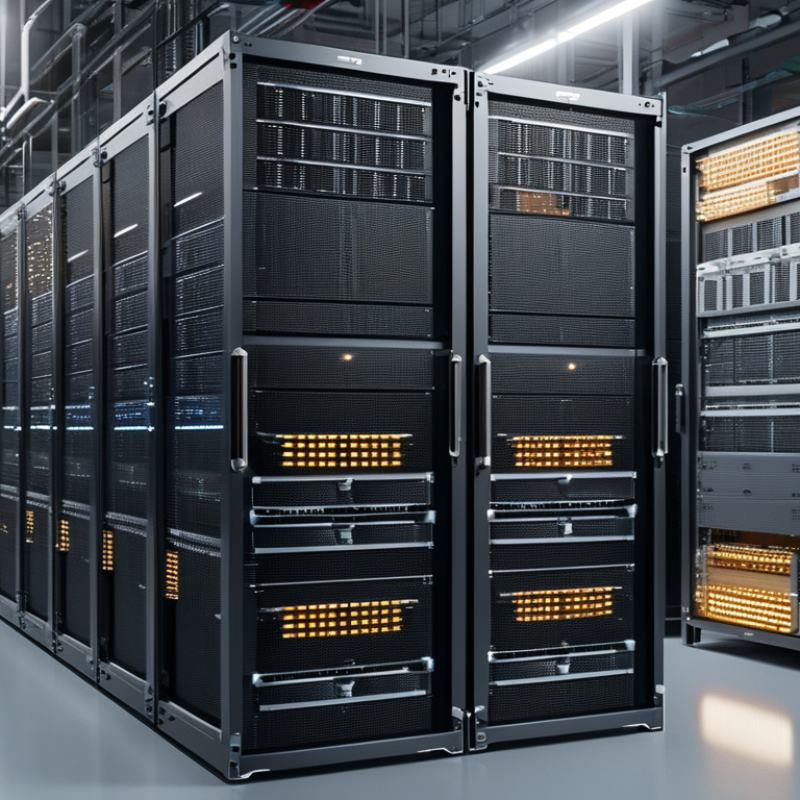
A strong China data center AI server manufacturer begins with practical engineering, not impressive brochures. Its teams should understand GPU density, power delivery, airflow, and rack-level heat management. During evaluations, buyers should inspect thermal test records, firmware controls, and component traceability. A reliable supplier can explain how a server behaves under sustained workloads, not only during short demonstrations.
Manufacturing consistency matters just as much. Clear inspection procedures, repeatable assembly, and documented burn-in testing reduce deployment surprises. Some manufacturers offer liquid-cooling options for dense AI clusters, while others focus on advanced air cooling. The right choice depends on facility design, maintenance skills, and energy limits. Small details matter, including cable routing, fan replacement access, and remote monitoring accuracy.
Support after delivery often separates a capable manufacturer from an average one. Experienced teams provide deployment guidance, spare-parts planning, and timely firmware updates. They should also communicate clearly when a problem is uncertain. No supplier is perfect. Documentation may lag behind a fast hardware revision, and a pilot installation can reveal unexpected noise or thermal behavior. Honest reporting, measurable testing, and a willingness to correct weaknesses build more trust than polished claims.
China’s leading data center AI server manufacturers are being judged by more than processor speed.
IDC reported that China’s AI server market reached approximately US$23.1 billion in 2023, growing 29.8% year over year. This expansion favors manufacturers with strong integration skills, local component coordination, and reliable delivery for large computing clusters.
Engineering depth matters. Leading suppliers now support liquid cooling, high-density GPU platforms, modular power systems, and remote fleet management.
The Uptime Institute reported an average data center PUE of about 1.56 in its 2024 survey. That figure makes energy efficiency a practical purchasing test, not a marketing phrase. Buyers should examine thermal test records, failure rates, firmware controls, and replacement response times.
Small details matter.
Service remains uneven.
Some manufacturers provide impressive laboratory results but weaker field support. That gap deserves scrutiny. The International Energy Agency expects global data center electricity demand to rise sharply by 2030, increasing pressure on cooling and power design.
China-based manufacturers with validated liquid-cooling experience, documented quality controls, and regional service teams may therefore offer stronger long-term value.
However, published performance figures are not always comparable. Independent testing, customer references, and a pilot deployment should support any final selection.
China’s AI data center servers increasingly rely on heterogeneous computing. They combine CPUs, AI accelerators, memory, and high-speed storage. This design supports training, inference, and video analysis workloads. Domestic accelerator platforms often use tailored software stacks, while open programming frameworks improve deployment flexibility. The result is useful, but not always simple.
High-speed interconnects are equally important. PCIe, CXL, RDMA, and high-bandwidth Ethernet reduce data movement between servers. That matters when a model uses thousands of accelerators. Liquid cooling is also gaining attention because dense racks can exceed traditional air-cooling limits. Engineers monitor coolant temperature, pump reliability, and rack-level power closely. A small thermal issue can reduce performance quickly. Energy efficiency remains a difficult trade-off.
Tips: Check accelerator compatibility, driver maturity, and framework support before purchase. Measure real inference latency, not only advertised peak speed. Inspect cable layout and airflow paths. Ask for failure-recovery tests. Security hardware, encrypted storage, and controlled access should be verified during acceptance. No design is perfect. Some systems still need better software optimization and easier maintenance. That gap deserves honest review.
Choosing a China-based AI server manufacturer requires more than comparing processor prices. Start by checking engineering depth, production control, and evidence from real deployments. Ask for rack-level test records, not polished slides. A credible team can explain GPU topology, power budgets, cooling limits, and failure rates. Request serialised quality records for boards, memory, fans, and power supplies. Small details matter. Review applicable safety, electromagnetic, and export compliance documents for your destination market. This shows professionalism, but documents alone do not prove field performance.
Evaluate performance with your own workloads. Run inference, training, and mixed-tenant tests using agreed datasets and power limits. Measure tokens per second, latency, thermal throttling, noise, and recovery after a component failure. A short test may mislead. Require a repeatable test protocol and raw logs. Visit the factory if possible, observing incoming inspection, burn-in rooms, and repair tracking. Even a well-managed visit has limits; demonstrations may be carefully prepared. Ask for customer references with similar rack density and deployment scale, while protecting confidential information.
Support quality often determines whether an expensive cluster remains useful. Check response times, spare-part stock, remote diagnostics, firmware controls, and technician coverage. Clarify warranty exclusions in plain language. Confirm who handles firmware vulnerabilities and how updates are verified. Cost estimates should include electricity, cooling, customs, maintenance, and replacement delays. I would also score communication: unclear answers during procurement usually become slower answers during an outage. My evaluation can still be imperfect. A supplier may perform well in testing yet struggle under regional logistics or rapid component changes. Keep acceptance criteria measurable, document every exception, and retest before signing a long-term agreement.
China-made AI servers are moving from laboratory trials into practical data center workloads. They support image inspection, language services, medical research, financial modeling, and smart manufacturing. A typical deployment may contain eight accelerator cards, high-speed networking, and liquid cooling. These details directly affect rack density, energy use, and maintenance time.
Performance is only one selection criterion. Buyers should examine verified benchmark results, accelerator compatibility, firmware stability, warranty coverage, and local service response. Power supplies should match regional standards, while security teams need documented update procedures and access controls. A reliable manufacturer should provide clear thermal data and explain performance under sustained workloads. Marketing figures can look impressive. Real workloads may tell a different story.
Future China-made AI servers will likely become more modular and energy aware. Chiplet designs, advanced cooling plates, and faster interconnects could reduce data movement between processors. Domestic software ecosystems may also improve model deployment and resource scheduling. Smaller servers will serve offices and factories, while dense systems will handle training and inference centers. Yet compatibility remains a concern. Hardware progress can outpace software support. Operators should test complete workloads before large purchases, including overnight inference, failover, and recovery. This cautious process costs time, but it exposes weaknesses that short demonstrations often hide.
| Application Area | Typical Workload | Recommended Server Design | Key Technical Requirements | Current Deployment Characteristics | Future Trend | Relevant Fact or Standard |
|---|---|---|---|---|---|---|
| Large-Scale AI Training | Pre-training and fine-tuning of large language, vision, speech, and multimodal models. | High-density multi-accelerator servers with large high-bandwidth memory capacity, redundant power supplies, high-speed network adapters, and scale-out cluster management. | FP16 BF16 High-speed fabric Distributed storage | Training is normally concentrated in centralized computing clusters because large models require high parallelism, shared datasets, and coordinated scheduling. | More domestic accelerator options, improved interconnect compatibility, model compression, and liquid-cooled high-density racks. | FP16 and BF16 are widely used reduced-precision formats for deep-learning training; distributed training commonly uses data, tensor, or pipeline parallelism. |
| Large Language Model Inference | Real-time text generation, retrieval-augmented generation, intelligent search, digital assistants, and content analysis. | Accelerated servers optimized for memory capacity, model loading, request batching, and efficient KV-cache management. | Low latency INT8/FP8 Memory bandwidth High concurrency | Inference can be deployed in centralized data centers or closer to users when data sovereignty, response time, or bandwidth costs are important. | Quantization, speculative decoding, sparse models, and mixed centralized-edge deployment will reduce cost per generated token. | INT8 uses 8-bit numerical representation and can reduce memory and arithmetic requirements when model accuracy remains acceptable. |
| Cloud AI Services | Shared AI-as-a-Service resources for model training, inference, analytics, and enterprise applications. | Modular servers supporting multiple accelerator types, virtualized resources, remote management, hot-swappable components, and flexible rack integration. | Resource isolation Multi-tenancy API compatibility Automation | Cloud operators typically combine general-purpose CPUs, AI accelerators, high-speed storage, and container orchestration to serve different workloads. | Disaggregated computing, composable infrastructure, accelerator pooling, and open software stacks are expected to improve utilization. | Container-based orchestration allows workloads to be packaged and scheduled consistently across physical and virtual infrastructure. |
| Edge AI and 5G Multi-access Edge Computing | Video analytics, smart-city services, industrial monitoring, traffic management, and low-latency local inference. | Compact, ruggedized, remotely manageable servers with moderate accelerator capacity, high-speed networking, and efficient thermal design. | Low latency Small footprint Remote operation Network resilience | Edge servers process selected data near cameras, factories, transport hubs, or communications facilities instead of sending all raw data to a central cloud. | More integrated 5G, edge-cloud coordination, local privacy processing, and lightweight multimodal models. | Ultra-Reliable Low-Latency Communications in IMT-2020 research targets very low air-interface latency, although real-world end-to-end latency depends on the complete network. |
| Smart Manufacturing | Machine vision, defect detection, predictive maintenance, robotics, digital twins, and production-line optimization. | Industrial-grade servers with GPU or AI-accelerator support, high-speed camera interfaces, redundant storage, and compatibility with industrial networks. | 24/7 reliability Deterministic response High availability Local inference | Local inference is valuable when production data is sensitive, network connectivity is limited, or inspection decisions must be made within milliseconds. | AI servers will increasingly connect with digital-twin platforms, robotics controllers, private 5G networks, and factory data spaces. | Industrial vision workloads often prioritize consistent latency and uptime in addition to raw throughput. |
| Healthcare and Life Sciences | Medical-image analysis, genomics, drug discovery, hospital data analytics, and clinical decision-support research. | Secure accelerator servers with encrypted storage, access control, redundant components, and support for both CPU and GPU-based analytics. | Data privacy Auditability Encryption High availability | Many workloads require controlled on-premises or private-cloud deployment because medical data is sensitive and access must be traceable. | Privacy-preserving learning, federated learning, confidential computing, and domain-specific medical models will become more important. | Federated learning enables multiple organizations to train a model without directly centralizing all local training data. |
| Scientific and Engineering Computing | Weather simulation, computational fluid dynamics, seismic analysis, materials research, and engineering optimization. | High-performance computing nodes with fast CPUs, accelerators, parallel file systems, low-latency interconnects, and strong numerical performance. | FP64/FP32 Parallel I/O Scalability Numerical accuracy | Scientific workloads often use heterogeneous computing, combining CPU-based simulation with accelerator-based matrix and vector operations. | AI-assisted simulation, surrogate models, digital twins, and tighter integration between supercomputing and AI clusters. | FP64 provides higher numerical precision than FP32 and remains important for many scientific and engineering calculations. |
| Energy-Efficient Data Centers | High-density AI computing with lower electricity consumption, reduced cooling overhead, and improved facility utilization. | Servers designed for hot-aisle or cold-aisle containment, direct-to-chip liquid cooling, intelligent power management, and higher-efficiency power supplies. | PUE Thermal management Power capping Renewable energy | AI racks generate more heat than conventional CPU racks, making airflow planning, liquid cooling, and power distribution central to deployment decisions. | Higher rack densities, immersion cooling, waste-heat reuse, renewable-powered computing, and carbon-aware workload scheduling. | PUE is calculated as total data-center facility energy divided by IT-equipment energy; a lower value indicates better infrastructure efficiency. |
| Domestic Supply-Chain and Open Ecosystem Development | Deployment of AI platforms that reduce dependence on a single processor, software stack, or infrastructure supplier. | Standards-oriented servers with replaceable compute modules, multiple accelerator interfaces, open management tools, and software portability support. | Interoperability Supply resilience Firmware security Lifecycle support | Purchasers increasingly evaluate total lifecycle cost, delivery stability, operating-system compatibility, driver maturity, and local technical service in addition to benchmark results. | More diversified processor architectures, domestic operating environments, open model formats, and locally supported AI software ecosystems. | China’s “East Data and West Computing” program established a national strategy for coordinating computing resources across regions, including national computing hubs and data-center clusters. |
| Future Data-Center Architecture | Mixed workloads combining AI training, inference, general-purpose computing, storage, networking, and real-time edge services. | Heterogeneous, composable infrastructure with pooled accelerators, software-defined networking, intelligent scheduling, and modular cooling and power systems. | Elastic scaling Automation Observability Resilience | Modern AI infrastructure is moving from isolated servers toward integrated clusters in which compute, storage, networking, and energy capacity are jointly optimized. | Autonomous data-center operations, AI-based resource scheduling, confidential computing, liquid-cooled dense racks, and carbon-aware workload placement. | Future performance will be measured by system-level efficiency, including utilization, latency, reliability, energy consumption, and cost per workload—not only accelerator speed. |
| Reference basis: publicly documented concepts and standards from China’s national computing-infrastructure planning, IMT-2020/5G technical objectives, data-center energy-efficiency practices, high-performance-computing methods, and established AI deployment architectures. Technical capabilities and deployment results vary by server configuration, software maturity, workload, cooling design, and data-center environment. | ||||||
Check engineering depth, cooling design, power systems, firmware controls, and delivery reliability. Small details matter.
High-density servers consume substantial electricity and generate intense heat. Review PUE, thermal records, power limits, and sustained-load results.
Request rack-level test records, raw logs, serialised quality records, and customer references. Polished slides are not enough.
Use your workloads for inference, training, and mixed-tenant testing. Measure latency, throughput, noise, throttling, and recovery after failures.
Liquid cooling, advanced cooling plates, and clear thermal limits can support dense racks. Confirm maintenance procedures and leak-response plans.
Support can determine whether a cluster remains useful. Check response times, spare-part stock, remote diagnostics, technicians, and warranty exclusions.
Include electricity, cooling, maintenance, customs, installation, and replacement delays. The purchase price can hide larger operating costs.
Hardware may advance faster than software compatibility. Component changes, regional logistics, and weak field support can create unexpected delays.
A visit can reveal inspection, burn-in, and repair processes. Demonstrations may be carefully prepared, so independent testing remains necessary.
More modular designs, faster interconnects, chiplets, and energy-aware cooling may improve efficiency. Test complete workloads overnight. My assessment may still be imperfect.
China’s data center AI server manufacturers are gaining attention for their ability to combine high-performance computing, efficient system design, flexible customization, and reliable large-scale production. A leading data center ai server manufacturer typically focuses on advanced processors, accelerator technologies, high-speed networking, intelligent storage, liquid or air cooling, and strong power-management solutions. It also provides stable supply chains, rigorous quality control, responsive technical support, and compatibility with different AI platforms and data center environments.
When evaluating manufacturers in China, buyers should consider computing performance, energy efficiency, scalability, security, product reliability, delivery capability, and long-term service. China-made AI servers are increasingly used in cloud computing, scientific research, smart manufacturing, finance, healthcare, transportation, and public services. Looking ahead, developments in heterogeneous computing, modular data centers, liquid cooling, edge AI, and energy-efficient architectures are expected to further improve the performance and sustainability of AI infrastructure.

Aiserver Manufacturer