Explore our top-tier server clusters, flash memory architectures, and state-of-the-art AI accelerator GPUs compiled to optimize complex computational environments.

Analyzing the paradigm shift in heavy compute demands across industries, from structural engineering to automated AI agent pipelines.
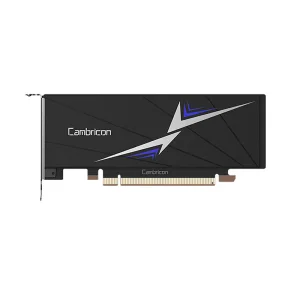
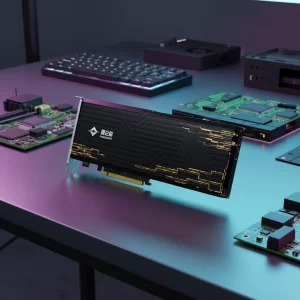
Modern enterprises no longer rely solely on remote cloud servers for real-time inference and training. Edge computational workstations equipped with customized accelerators, like the Kunlunxin R200 and Cambricon MLU370x8, provide key data privacy, lightning-fast response times, and highly predictable operating costs.
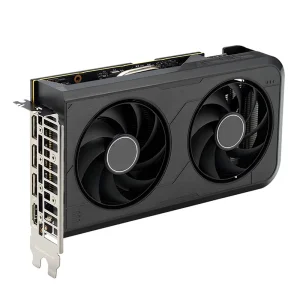
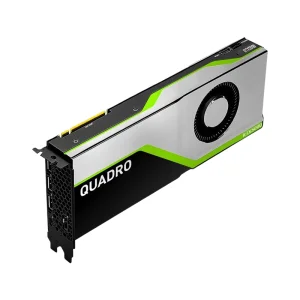
Scientific modeling, structural analysis, and cinematic animation workloads require highly specialized GPU architectures. Graphics interfaces like the NVIDIA Quadro RTX 5000 and Quadro RTX 4000 provide Error-Correcting Code (ECC) memory and professional drivers to guarantee uptime during long render processes.
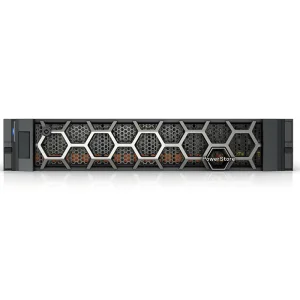
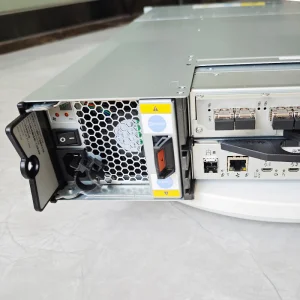
The rise of unstructured data demands scalable storage arrays like the Dell PowerStore 500T and PowerVault ME5012. System integrators combine high-density NVMe hardware configurations with dual-socket processors to manage large volumes of transactional data smoothly.
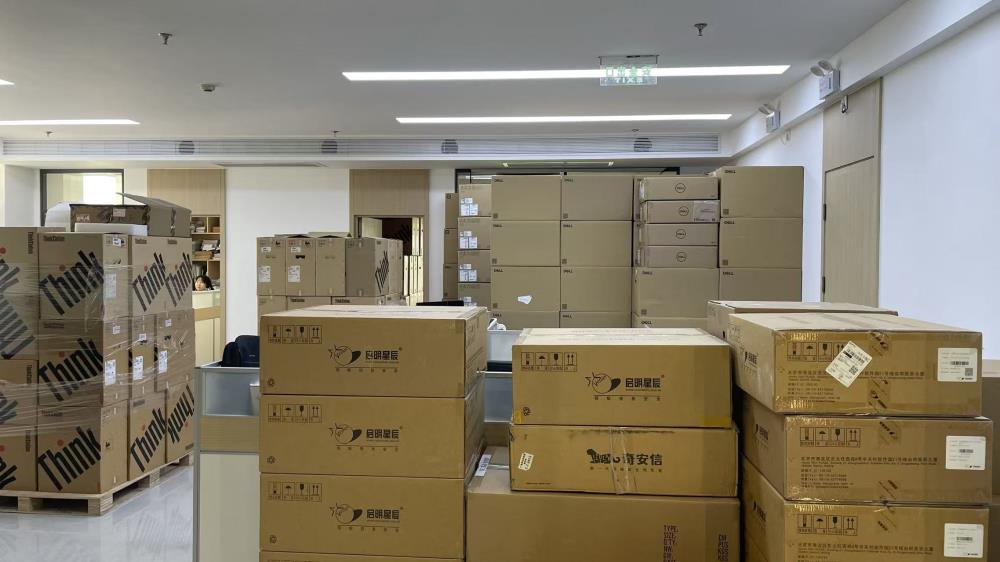
Our company was founded in 2023. Over the past three years of export operations, we have established robust partnerships with ten major upstream silicon suppliers. This enables us to maintain a reliable inventory of hard-to-source system configurations. Every unit undergoes 100% manual inspection prior to shipping, ensuring full functional integrity right out of the box.




How top-tier computing architectures operate inside live professional ecosystems and performance environments.
For model finetuning and neural networks, deep learning cards like the Cambricon MLU370x8 process vast datasets on-premise. In edge architectures, a system paired with the low-latency Kunlunxin R200 helps handle real-time intelligent vision systems without suffering from cloud latency penalties.
In medical fields, accurate rendering of volumetric datasets, MRI scans, and tomography requires high graphic reliability. GPUs like the NVIDIA Quadro RTX 5000 use specialized software compatibility layers (ISV) to render medical images without visual artifacts that could compromise diagnosis.
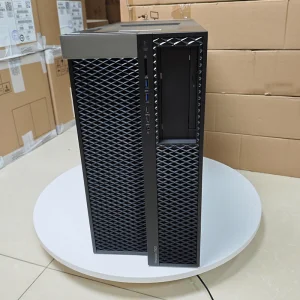
Animation studios running resource-heavy tasks like global illumination and ray-traced reflections utilize robust hardware setups. Using workstations like the dual-socket Precision T7920 paired with NVIDIA Quadro RTX 4000 cards ensures smooth, uninterrupted render tasks.
Compare primary processing elements, acceleration components, and storage setups to match your organization's technical needs.
| System Component | Acceleration Type | Optimal Use Cases | Hardware Suitability |
|---|---|---|---|
| NVIDIA Quadro RTX 5000 | Professional Ray Tracing GPU | Medical imaging, CAD / CAM engineering, high-poly 3D modeling | High memory capacity, ISV certified drivers, error-correction features |
| Cambricon MLU370x8 | AI Inference / Compute ASIC | Large language model execution, high-density neural analysis | Low-power execution, high throughput per watt, scalable configurations |
| Kunlunxin R200 | Low Latency AI Compute Card | Smart vision applications, public security infrastructure | High execution speed, optimized for edge-computing servers |
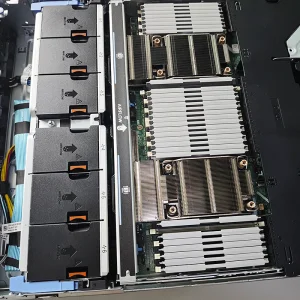
| Dell PowerEdge R860 | Multi-socket Rack-mount Compute Node | Relational databases, ERP system hosts, enterprise virtualization | Dual or quad Intel Xeon processor scaling, large memory configuration |
| Dell PowerStore 500T | NVMe Flash Array | Unified block storage, databases, container management | Low response time, active-active controller setup, built-in deduplication |
Analyzing the technological shifts redefining the layout of industrial workstations and high-performance computing infrastructure.
Companies are moving away from purely cloud-based computational setups. Modern IT architectures combine local on-premise compute nodes with backup cloud environments to lower operating expenses and keep sensitive operational data protected.
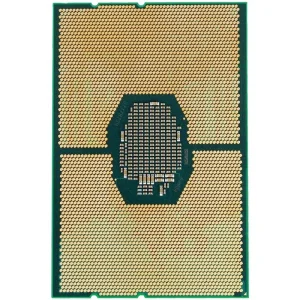
Next-generation processor technologies, such as the Intel Xeon 6th Gen CPU 6517P, emphasize high energy efficiency. These processors use adaptive power scaling and advanced thermal management to deliver reliable performance without excessive energy consumption.
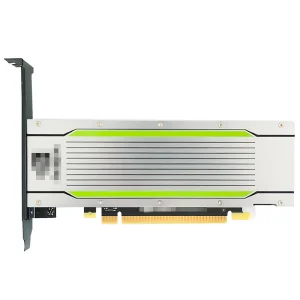
Computing setups increasingly rely on mixed hardware systems, combining standard CPUs with specialized accelerators. Integrating specialized chips, such as the Tesla T4 or local custom AI boards, helps systems process heavy visual analytics workloads efficiently at the edge.
Key parameters for IT managers and purchasing officers to ensure compatibility, durability, and a lower total cost of ownership (TCO).
Workstation systems must handle extended high-performance workloads without thermal throttling. Selecting components with proper industrial fan designs, cooling blocks, and ventilation paths prevents heat-related slowdowns and helps extend the system's operational lifespan.
Data servers running continuous database services require constant uptime. Implementing redundant power options, like double hot-swap power units, ensures the systems remain active and functional even during unexpected power hardware failures.
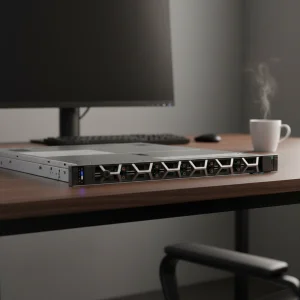
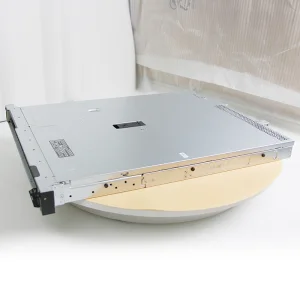
Using standard 1U, 2U, or 4U rack layouts makes physical installation in server rooms simple. Selecting setups that fit easily into existing standard racks helps minimize deployment times and keeps rack space usage optimized.
Expert guidance on component selection, system architecture, and optimization steps.
Enterprise-grade cards, like the NVIDIA Quadro series, are built with Error-Correcting Code (ECC) VRAM. This detects and corrects memory errors to prevent system crashes during complex, multi-day computing runs. They also feature specialized, long-term drivers and certifications from major software developers (ISVs) for professional design and engineering applications.
Using an all-flash NVMe system, like the PowerStore 500T, removes the drive-access bottlenecks common in older hard drive configurations. This provides much higher data speeds and lower response times, which helps speed up rendering processes, data training tasks, and container management workloads.
For edge systems running localized analysis, energy efficiency and physical space are key. Options like the Cambricon MLU370 or Kunlunxin R200 cards are built specifically for efficient local processing. They run visual and data analysis pipelines on site, saving bandwidth by avoiding constant data uploads to external cloud storage.
Our QA process follows ISO 9001 and ISO 14001 guidelines. Each system undergoes a full functional inspection, where we test processing components, memory configurations, and thermal performance under load to ensure it operates correctly before shipment.
Discover our high-capacity GPU systems, server nodes, and expandable flash storage options designed for flexible data center deployment.
 Aiserver Manufacturer